

How is steel sheet manufactured?
Steel sheets are a fundamental material in various industries, from construction to automotive manufacturing. As a leading steel sheet supplier, I'm excited to take you through the intricate process of how steel sheets are manufactured. Understanding this process not only gives you insights into the quality and characteristics of the steel sheets but also helps you make informed decisions when purchasing them.
Raw Material Selection
The journey of steel sheet manufacturing begins with the careful selection of raw materials. The primary ingredient is iron ore, which is mined from the earth. Iron ore contains varying amounts of iron oxide, and high - grade ores are preferred as they require less processing to extract the iron. Alongside iron ore, other materials such as coal and limestone are also crucial. Coal is used as a fuel and a reducing agent in the iron - making process, while limestone acts as a flux to remove impurities.
Once the raw materials are mined, they are transported to the steel mill. At the mill, the iron ore is first crushed and screened to remove any large rocks and debris. It is then further processed to increase its iron content. This may involve processes like magnetic separation, where magnetic properties are used to separate iron - rich particles from other materials.
Ironmaking: The Blast Furnace Process
The next step is to convert the processed iron ore into iron. This is done in a blast furnace, a large cylindrical structure where the raw materials are heated to extremely high temperatures. The blast furnace is charged with layers of iron ore, coke (processed coal), and limestone. A hot blast of air is then blown into the furnace from the bottom, causing the coke to burn and produce carbon monoxide.
The carbon monoxide reacts with the iron oxide in the iron ore, reducing it to iron. The chemical reaction can be represented as: (Fe_2O_3+3CO\rightarrow2Fe + 3CO_2). The molten iron, along with slag (a by - product formed from the reaction of limestone with impurities), collects at the bottom of the furnace. The slag is lighter than the molten iron and floats on top, allowing it to be easily separated.
Steelmaking: Converting Iron to Steel
The molten iron obtained from the blast furnace contains impurities such as carbon, silicon, sulfur, and phosphorus. These impurities need to be removed to produce steel, which has better properties than iron. There are two main methods of steelmaking: the basic oxygen furnace (BOF) process and the electric arc furnace (EAF) process.
In the BOF process, pure oxygen is blown into the molten iron at high speed. The oxygen reacts with the impurities, oxidizing them and converting them into slag. This process can reduce the carbon content of the iron from around 4% to less than 1%. The BOF process is efficient and can produce large quantities of steel in a relatively short time.
The EAF process, on the other hand, uses scrap steel as the primary raw material. Electric arcs are created between electrodes and the scrap steel, heating it to the melting point. Additional alloys can be added during the melting process to achieve the desired steel composition. The EAF process is more energy - efficient when using scrap steel and is suitable for producing specialty steels.
Continuous Casting
After the steel is made, it is in a molten state. The next step is to solidify it into a more manageable form. Continuous casting is the most common method used for this purpose. In continuous casting, the molten steel is poured into a water - cooled copper mold. As the steel enters the mold, it begins to solidify from the outside in.
The solidified steel shell is then continuously pulled out of the mold at a controlled rate. As it moves along a series of rollers, the steel continues to cool and solidify completely. The result is a semi - finished product called a slab, bloom, or billet, depending on its cross - sectional dimensions. Slabs are typically used for making steel sheets, while blooms and billets are used for other products such as bars and rods.
Hot Rolling
The slab is then sent to the hot rolling mill. Hot rolling is a process where the slab is heated to a high temperature (usually above 1,000°C) and passed through a series of rolling mills. The rolling mills consist of large rollers that apply pressure to the slab, reducing its thickness and increasing its length.
During hot rolling, the steel becomes more malleable, allowing it to be shaped more easily. The repeated passes through the rolling mills gradually reduce the thickness of the slab to the desired gauge of the steel sheet. The hot - rolled steel sheet has a characteristic rough surface finish due to the high - temperature rolling process.
Cold Rolling
For applications that require a smoother surface finish, better dimensional accuracy, and higher strength, the hot - rolled steel sheet may undergo cold rolling. Cold rolling is similar to hot rolling, but it is carried out at room temperature. The hot - rolled sheet is first pickled to remove any scale or oxide layer on its surface.
The pickled sheet is then passed through a cold rolling mill, where it is further reduced in thickness. Cold rolling increases the strength and hardness of the steel sheet by work - hardening the material. The cold - rolled steel sheet has a smooth, shiny surface and can be produced in thinner gauges than hot - rolled sheets.
Surface Treatment
After cold rolling, the steel sheet may undergo various surface treatments to improve its corrosion resistance, appearance, and other properties. One common surface treatment is galvanizing, where a layer of zinc is applied to the steel sheet. Galvanizing can be done through hot - dip galvanizing or electro - galvanizing.
In hot - dip galvanizing, the steel sheet is dipped into a bath of molten zinc. The zinc reacts with the steel to form a protective layer that prevents corrosion. Electro - galvanizing, on the other hand, uses an electric current to deposit a thin layer of zinc onto the steel surface.
Other surface treatments include painting, powder coating, and tinning. Painting provides a decorative finish and additional corrosion protection, while powder coating offers a durable and uniform finish. Tinning is used mainly for food - packaging applications, as tin is non - toxic and provides a barrier against corrosion.
Quality Control
Throughout the manufacturing process, strict quality control measures are in place to ensure that the steel sheets meet the required standards. Samples are taken at various stages of production and tested for chemical composition, mechanical properties, and surface quality.
Chemical analysis is used to determine the exact composition of the steel, including the amounts of carbon, manganese, silicon, and other elements. Mechanical tests such as tensile testing, hardness testing, and impact testing are performed to evaluate the strength, ductility, and toughness of the steel sheet. Surface inspection is carried out to detect any defects such as cracks, scratches, or unevenness.
Applications of Steel Sheets
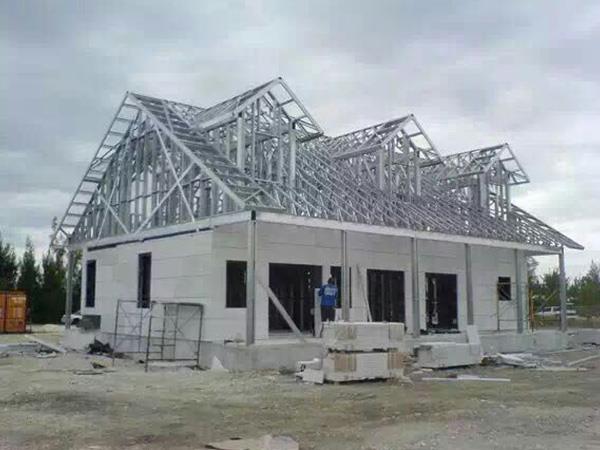
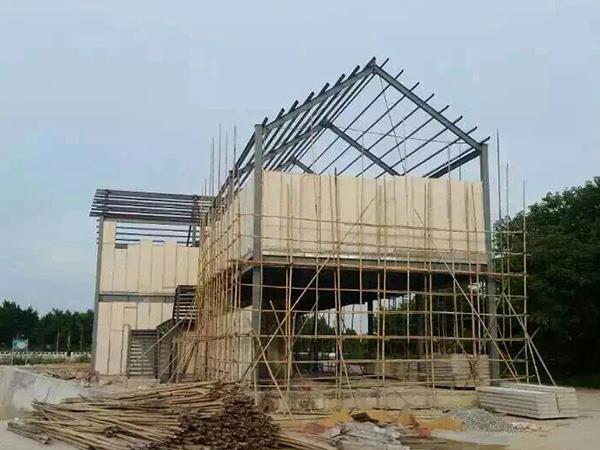
Steel sheets have a wide range of applications across different industries. In the construction industry, they are used for roofing, wall cladding, and structural components. For example, steel shed buildings often use steel sheets for their durability and strength. In the automotive industry, steel sheets are used to make car bodies, doors, and hoods. High - strength steel sheets are preferred as they can improve the safety and fuel efficiency of vehicles.
The manufacturing of steel structures also heavily relies on steel sheets. High Rise Building Steel Structure Skyscraper Framing Systems require steel sheets with specific properties to withstand the forces acting on the building. Additionally, Steel Structure Contract Manufacturing uses steel sheets to fabricate various components for different projects.
Conclusion
As a steel sheet supplier, I take pride in providing high - quality steel sheets that are manufactured through a meticulous process. From the selection of raw materials to the final surface treatment, every step is carefully controlled to ensure the best possible product. Whether you need steel sheets for construction, automotive, or other applications, understanding the manufacturing process can help you choose the right product for your needs.
If you are interested in purchasing steel sheets, I encourage you to reach out to discuss your requirements. We can provide you with detailed information about our products, including their specifications, prices, and delivery options. Our team of experts is ready to assist you in finding the perfect steel sheet solution for your project.
References
- ASM Handbook Committee. (2004). ASM Handbook, Volume 1: Properties and Selection: Irons, Steels, and High - Performance Alloys. ASM International.
- Totten, G. E., & MacKenzie, D. S. (2003). Handbook of Aluminum: Physical Metallurgy and Processes. CRC Press.
- Degarmo, E. P., Black, J. T., & Kohser, R. A. (2003). Materials and Processes in Manufacturing. John Wiley & Sons.