

How to choose the right steel column for a project?
Selecting the appropriate steel column for a project is a critical decision that can significantly impact the structural integrity, safety, and cost - effectiveness of a building. As a steel column supplier, I understand the complexities involved in this choice. In this blog, I will guide you through the key factors to consider when choosing the right steel column for your project.

1. Load - Bearing Requirements
The first and foremost factor to consider is the load - bearing capacity of the steel column. Different projects have different loads, including dead loads (the weight of the structure itself), live loads (such as people, furniture, and equipment), wind loads, and seismic loads.
For a small - scale residential project, the load requirements are relatively low. A light - gauge steel column may be sufficient to support the structure. However, for a high - rise commercial building, the columns need to withstand much higher loads. In such cases, heavy - section steel columns, such as wide - flange (W) shapes, are often required. These columns have a large cross - sectional area and high moment of inertia, which allows them to resist bending and axial loads effectively.
To determine the exact load - bearing capacity needed, it is essential to conduct a detailed structural analysis. This analysis takes into account the building's dimensions, occupancy, location, and local building codes. Structural engineers use sophisticated software and mathematical models to calculate the loads and select the appropriate steel column size and shape.
2. Column Height and Spacing
The height and spacing of the columns also play a crucial role in the selection process. Taller columns are more prone to buckling, a phenomenon where the column fails under compression by suddenly bending or twisting. To prevent buckling, the slenderness ratio (the ratio of the column's effective length to its least radius of gyration) must be within acceptable limits.
If the columns are spaced far apart, they need to be stronger to support the larger spans of beams and slabs. In contrast, closer column spacing allows for the use of smaller and less expensive columns. When designing a building, architects and engineers need to balance the column spacing to optimize the use of materials and the functionality of the space.
For example, in a warehouse with large open spaces, wider column spacing may be preferred to maximize the usable floor area. This requires stronger and larger steel columns. On the other hand, in a multi - storey office building, a more regular and closer column spacing can be used to support the floors and partitions more efficiently.
3. Building Design and Aesthetics
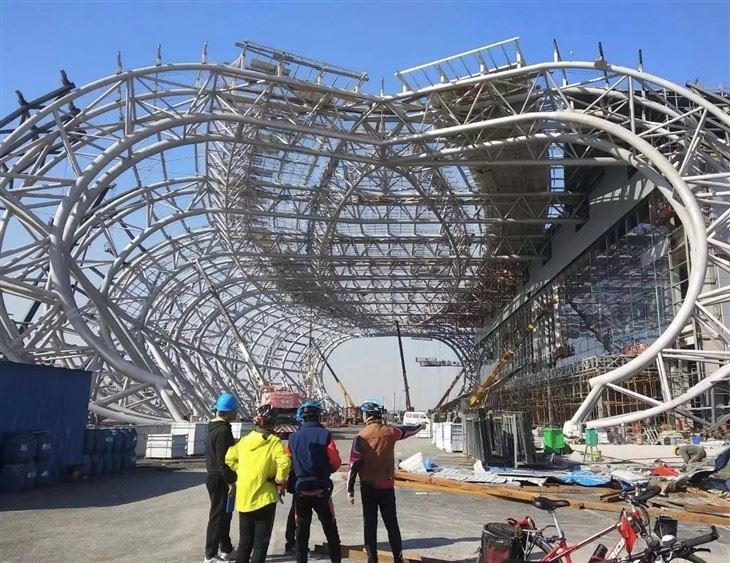
The design and aesthetics of the building can also influence the choice of steel columns. In some modern architectural designs, exposed steel columns are used as a design feature to create an industrial or contemporary look. In such cases, the appearance of the columns, including their shape, finish, and surface treatment, becomes important.
For example, circular or square hollow sections can be used to achieve a sleek and modern look. These columns can be left exposed or painted to match the building's color scheme. In addition, the connection details between the columns and beams also need to be carefully considered to ensure a clean and aesthetically pleasing appearance.
However, in other buildings, the columns may be hidden within the walls or partitions. In these situations, the focus is more on the structural performance and cost - effectiveness of the columns, rather than their appearance.
4. Material Properties
The material properties of the steel used in the columns are another important consideration. Different grades of steel have different strength, ductility, and corrosion resistance properties.
High - strength steels, such as ASTM A992, are commonly used in structural applications because they offer higher yield and ultimate strengths compared to lower - grade steels. This allows for the use of smaller and lighter columns, which can reduce the overall weight of the structure and the cost of materials and construction.
Ductility is also an important property, especially in seismic - prone areas. Ductile steels can deform plastically under extreme loads, such as earthquakes, without sudden failure. This helps to dissipate energy and prevent the collapse of the building.
Corrosion resistance is crucial, especially for outdoor or coastal structures. Steel columns can be protected from corrosion through various methods, such as galvanizing, painting, or using corrosion - resistant alloys. Galvanized steel columns have a zinc coating that provides a sacrificial layer of protection against rust.
5. Connection Types
The way the steel columns are connected to the beams and the foundation is a critical aspect of the structural design. There are several types of connections, including welded connections, bolted connections, and moment - resisting connections.
Welded connections provide a strong and rigid connection between the column and the beam. They are often used in high - rise buildings and structures where high - strength connections are required. However, welding requires skilled labor and proper quality control to ensure the integrity of the connection.
Bolted connections are more flexible and easier to install. They allow for some degree of movement between the column and the beam, which can be beneficial in seismic - prone areas. Bolted connections are also easier to disassemble and modify, which can be an advantage during construction or renovation.
Moment - resisting connections are designed to transfer bending moments between the column and the beam. They are used in structures where the columns need to resist lateral loads, such as wind or seismic forces. These connections typically require more complex design and construction techniques.
6. Cost Considerations
Cost is always a significant factor in any construction project. The cost of steel columns includes the cost of the material, fabrication, transportation, and installation.
The choice of steel grade, size, and shape can have a significant impact on the material cost. As mentioned earlier, high - strength steels may be more expensive than lower - grade steels, but they can also reduce the overall weight of the structure and the amount of material needed.
Fabrication costs depend on the complexity of the column shape and the type of connections. Welded connections generally require more labor and equipment than bolted connections, which can increase the fabrication cost.
Transportation costs are influenced by the size and weight of the columns. Larger and heavier columns may require special transportation equipment and may incur higher shipping fees.
Installation costs are affected by the ease of installation and the type of connection. Bolted connections are generally easier and faster to install than welded connections, which can reduce the installation time and cost.
7. Availability and Lead Time
The availability of the steel columns and the lead time for delivery are also important factors to consider. Some specialized steel column shapes and sizes may not be readily available in the market, and it may take longer to fabricate and deliver them.
As a steel column supplier, I work closely with my customers to ensure that the required columns are available when needed. I maintain a stock of common steel column sizes and shapes, and I have established relationships with reliable steel mills and fabricators to ensure a steady supply of materials.
8. Compliance with Building Codes and Standards
Finally, it is essential to ensure that the selected steel columns comply with all relevant building codes and standards. Building codes are designed to ensure the safety and structural integrity of buildings, and they specify the minimum requirements for the design, materials, and construction of steel columns.
In the United States, the American Institute of Steel Construction (AISC) provides the design standards for steel structures. These standards cover everything from the selection of steel grades to the design of connections. Local building codes may also have additional requirements, such as seismic design provisions or corrosion protection requirements.
As a steel column supplier, I am familiar with the latest building codes and standards, and I can provide my customers with columns that meet or exceed these requirements. I also work closely with structural engineers and contractors to ensure that the columns are installed correctly and in compliance with the codes.
Conclusion
Choosing the right steel column for a project is a complex process that requires careful consideration of multiple factors, including load - bearing requirements, column height and spacing, building design and aesthetics, material properties, connection types, cost, availability, and compliance with building codes.
As a steel column supplier, I am committed to providing my customers with high - quality steel columns that meet their specific project requirements. Whether you are building a small residential house or a large commercial high - rise, I can help you select the right steel columns and provide you with the support and expertise you need throughout the project.
If you are interested in purchasing steel columns for your project, please feel free to contact me for more information and to discuss your specific needs. I look forward to working with you to ensure the success of your project.
References
- American Institute of Steel Construction (AISC). (2017). Specification for Structural Steel Buildings.
- Building Seismic Safety Council (BSSC). (2015). NEHRP Recommended Provisions for Seismic Regulations for New Buildings and Other Structures.
- International Building Code (IBC). (2018). International Code Council.