

What is the elongation rate of steel sheets?
Yo, what's up everyone! I'm a supplier of steel sheets, and today I wanna talk about something super important in the world of steel – the elongation rate of steel sheets.
So, first off, what the heck is the elongation rate? Well, in simple terms, it's a measure of how much a steel sheet can stretch before it breaks. When we're testing a steel sheet, we usually take a sample, pull it slowly until it snaps, and then measure how much longer it got compared to its original length. This measurement is expressed as a percentage, and that's the elongation rate.
Let's say we start with a steel sheet sample that's 100 millimeters long. After we pull it until it breaks, and it ends up being 120 millimeters long. We calculate the elongation rate like this: we subtract the original length from the final length (120 - 100 = 20), then divide that by the original length (20 / 100 = 0.2), and finally multiply by 100 to get the percentage (0.2 * 100 = 20%). So, in this case, the elongation rate is 20%.
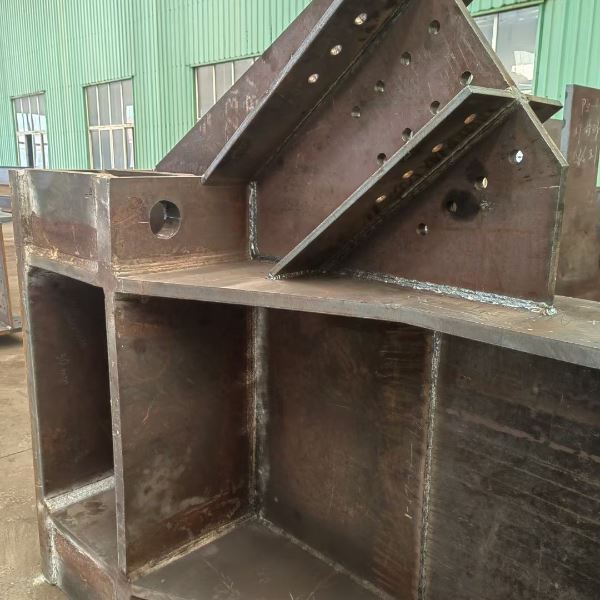
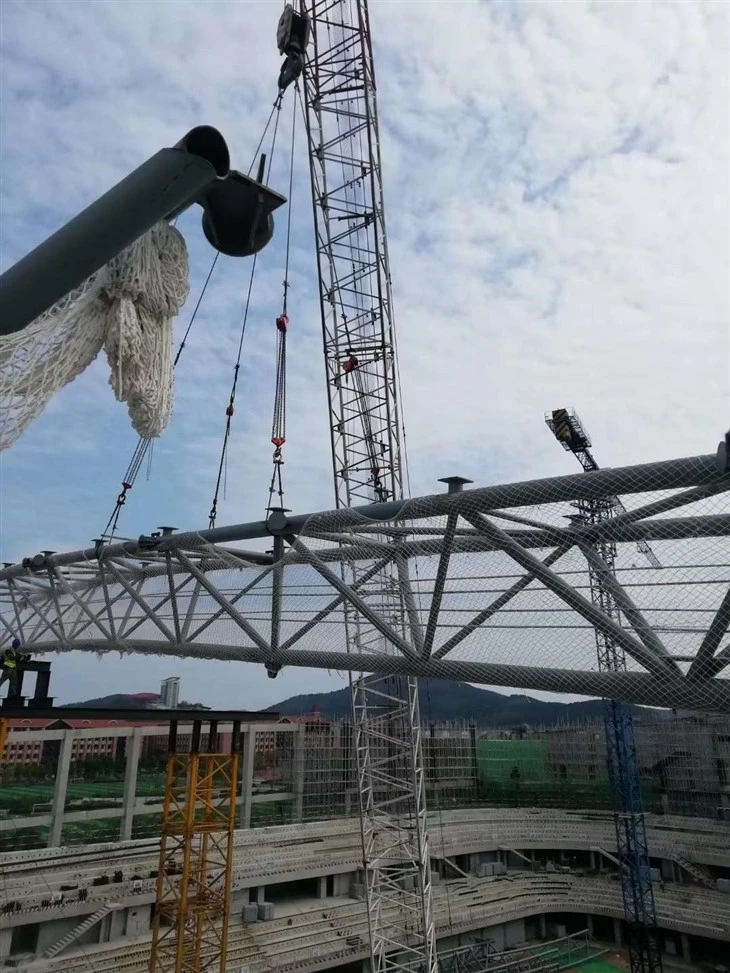
Why does the elongation rate matter? It's a big deal in a whole bunch of industries. For example, in construction, steel sheets with a high elongation rate are often preferred. When building structures, the steel needs to be able to withstand stress and deformation without cracking. A higher elongation rate means the steel can bend and stretch more, which is crucial for things like Steel Structure Contract Manufacturing. In these projects, the steel might be subjected to all sorts of forces, like wind, earthquakes, or the weight of the building itself. If the steel has a low elongation rate, it could break under stress, leading to serious safety issues.
In the automotive industry, elongation rate is also key. Car manufacturers use steel sheets to make various parts of the vehicle, like the body panels. During a collision, the steel needs to deform in a controlled way to absorb energy and protect the passengers. Steel with a good elongation rate can do this effectively. It can stretch and bend without shattering, which helps to reduce the impact force inside the car.
Now, what factors affect the elongation rate of steel sheets? There are quite a few. One of the main ones is the chemical composition of the steel. Different elements can have a big impact on how the steel behaves. For example, carbon is a common element in steel. A higher carbon content generally makes the steel stronger but less ductile, which means it has a lower elongation rate. On the other hand, adding elements like manganese, nickel, or chromium can improve the steel's ductility and increase the elongation rate.
The manufacturing process also plays a huge role. How the steel is heated, rolled, and cooled can all affect its properties. For instance, if the steel is rolled at a high temperature, it can result in a more uniform grain structure, which usually leads to better ductility and a higher elongation rate. Heat treatment processes, like annealing, can also be used to improve the elongation rate by relieving internal stresses in the steel.
Another factor is the thickness of the steel sheet. Generally, thinner steel sheets tend to have a higher elongation rate than thicker ones. This is because thinner sheets have less material to resist deformation, so they can stretch more easily.
As a steel sheet supplier, I know how important it is to offer products with the right elongation rate for different applications. That's why we carefully control the manufacturing process to ensure the quality of our steel sheets. We test each batch to make sure it meets the required standards for elongation rate and other properties.
If you're in the market for steel sheets, you might be wondering how to choose the right ones based on the elongation rate. Well, it really depends on your specific needs. If you're working on a project that requires high ductility, like steel truss manufacturers, you'll want to look for steel sheets with a high elongation rate. On the other hand, if you need a stronger and more rigid material, you might be able to accept a lower elongation rate.
When you're comparing different steel sheet suppliers, make sure to ask about the elongation rate of their products. A reliable supplier should be able to provide you with detailed information about the properties of their steel sheets, including the elongation rate. You can also ask for test reports to verify the quality.
In addition to the elongation rate, there are other properties of steel sheets that you should consider. Things like tensile strength, yield strength, and hardness are all important. These properties are all related to each other, and they can affect how the steel sheet performs in different applications. For example, a steel sheet with high tensile strength and a good elongation rate is often ideal for applications where the material needs to withstand both stretching and high loads, like Welding Fabrication.
So, if you're looking for high-quality steel sheets with the right elongation rate and other properties, I'm here to help. Whether you're in construction, automotive, or any other industry that uses steel sheets, we can provide you with the products you need. We have a wide range of steel sheets available, and we can customize them to meet your specific requirements.
If you're interested in learning more or want to discuss your steel sheet needs, feel free to reach out. We're always happy to have a chat and help you find the best solution for your project.
References
- "Metallurgy for Dummies"
- "Steel Sheet Handbook"
- Industry research reports on steel properties and applications